Friday, January 10, 2014
Best Books I Read in 2013
 |
| Click here for more. |
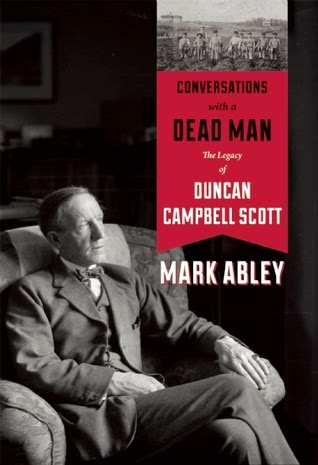 |
| Click here for more. |
 |
| Click here for more. |
 |
| Click here for more. |
 |
| Click here for more. |
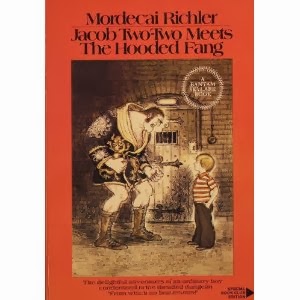 |
| Click here for more. |
 |
| Click here for more. |
 |
| Click here for more. |
Labels: 2013, best of, books, canlit, Fiction, non-fiction


Monday, February 13, 2012
Monday
Friday, February 03, 2012
9. French for the F-word
They were hauled into the office and plunked into cushy brownish-orange chairs that provided no comfort. The cold eyes of Secretary Alice White froze them.
They sat and thought of doom. It was called the principal’s office but everyone knew it was owned and ruled by Vice-Principal Morris. The principal, whatever his name was, was a figurehead at best. In the silence of Mrs. White’s frosty stare they took deep breaths, smelled the new carpet, tried not to look at each other, listened to the clock’s second hand tick and tick.
The American kid muttered something strange. "Lamb-are-eh."
He was in the middle. They glanced at him, nothing moving but their eyes.
"What?" Pierre whispered.
"Lamb-are-eh," he said. "It's French for...the f-word."
Pierre snickered and Danh cackled, a high-pitch staccato wail.
Mrs. White snapped her head up. "Shhhh!"
They looked down at the grey carpet, inhaled its chemical smell. "You talk French?" Danh whispered.
"Nope."
"Lamb-are-eh." Pierre rolled the syllables over his tongue. His maman was Acadian but he never learned her language. It thrilled him to know she’d hate him saying this particular word.
"Boys!" Vice-Principal Morris barked them out of their solidarity. He was a red-headed giant with a grizzly face and a gap-toothed beaver smile. He jerked his thumb and led them into his personal office with the placard reading 'Morris'. He pointed at two chairs across from his desk. Pierre walked past the chairs and stood with arms folded over his belly.
Danh took the seat closest to Pierre and Gerry took the other.
"Well boys," Mr. Morris began. "Mrs. Charles tells me you all had a little scuffle in the schoolyard."
He picked at his teeth with the nail on his pinkie. When the pinkie was retracted Pierre couldn’t see anything on it or the teeth.
"She tells me there were some expletives put into play, by which I mean some references to adults-only activities were made by you boys, and perhaps some of you described going number two in certain vulgar terms."
He went back to the teeth again.
"Furthermore, as I can see by your clothes, blood was drawn over the matter. It must have been quite serious. Care to tell me about it?"
Silence, other than Mr. Morris' wall clock ticking. It sounded identical to the one in the main office, equally relentless. Pierre didn’t dare turn to see if it was the same. He smelled the fumes of another new carpet. Mr. Morris' eyes were on him now, and only him.
"Pierre?" Mr. Morris said. His eyes were blue under his bright red afro, like some kind of sadistic heathen pirate on the Indian Ocean. "Pierre?"
Labels: 2012, Fiction, love junk, nova scotia
Friday, January 27, 2012
9. Crowd Control
Before Pierre could count two he heard and felt Gerry’s forehead break his nose. Pierre dropped to the ground.
"Fuck you, fatty!" Gerry yelled, kicking Pierre in the gut.
Pierre felt nothing but the crowd around them getting closer, laughing louder. He could smell the mud off the boys’ boots at the periphery of his sight. He knew the girls would be at the back, peering over shoulders pretending to be disgusted. He winced and looked down, noticed Gerry was wearing shiny black rubber boots. What a loser. Pierre caught and yanked Gerry’s foot as he tried to kick him again. He climbed on top and sat on Gerry's chest, pounded his face.
His own pain was sinking in now and he felt blood rolling from his nose over his lips. His head was ringing. That was fine. He had to win the crowd back. That was the main thing.
"Up - yours - with - a - rubber - hose," Pierre grunted, one word for each time he punched. The crowd was laughing with him now. Every punch got harder.
Gerry was kneeing Pierre's back but it didn’t hurt. Pierre wailed on him harder. It was easy to connect; Gerry didn’t protect his face and he kept his eyes closed.
"Say uncle," Pierre said.
Gerry opened his eyes. There was blood all over his face and a drop of it rolled into his eyes. He didn’t blink. "Hockey sucks," he panted.
Sadly, Pierre was going to have to kill this kid. "OK," he said, pulling his fist back.
Labels: 2012, Fiction, love junk, nova scotia
Thursday, January 26, 2012
32. Best Friends
"Tell me again about these guys."
Jamaica’s voice was soft, like a small sharp needle pushed ever-so-gently into the neck. He’d explained it before.
Outside he could hear the increasing pitch of a 767 engine as it went airborne. He patted down his cargo shorts until he found the Maalox pills. The crinkle of the plastic wrap was reassuring. He popped one.
"They're my best friends," he said.
"I thought Travis and Pete were your best friends."
He squinted water from his eyes and gagged a little on the Maalox. She was looking at him so he shook his head. "Nope." He burped softly. "Not even close."
"If these guys, neither of whom I have ever met, are your best friends, why you so nervous?"
"Pierre!"
He snapped his head sideways and peered back. It was Gerry. What were the odds of that? His flight must have come in early.
-
Labels: 2012, Fiction, love junk, nova scotia
Wednesday, November 02, 2011
Finale
Play the song.
Too hip for then
now too far.
Attack every angle,
your last kill.
Don’t mind the lens.
Just give me
one last shot of you
dancing before you die.
You ahead,
giant feet flying
farther away,
quickened by the thrill of
anticipated horizons.
Still you move,
still you whoop,
just out of range.
Make room,
shove close.
A duty and joy.
Zoom in:
one last shot of you
dancing before you die.
Labels: 2011, Fiction, nova scotia, Poetry
Friday, February 04, 2011
The Study of Placenta
"Did you know the placenta is essentially a parasite?" she said, tapping my paper with her index finger.
I looked up at her, raised my eyebrow and instantly regretted not plucking its middle section that morning, or putting on some makeup at least. She had high Polynesian cheekbones under spiked brown hair, wore pink lip gloss and a North Face fleecy.
"Its effect on a woman’s body is similar to that of cancer," she added.
"Really," I said, but the word got caught in the phlegm of my throat and I coughed it at her.
She squinted and pursed her lips. "Totally," she said.
We’d been sitting side by side in silence since our plane took off two hours earlier. I didn’t even look at her before she spoke. "The Kaili of Central Sulawesi believe the placenta is the elder brother of the child," I said, pointing at the paper I’d been reading on the very subject. "They preserve it in a pot wrapped in white cotton, and hide it under the mother’s sarong. She buries it and the spot is marked with palm trees."
"Well," she said, "Thank God I don’t work with the Kaili of Central Sulawesi. I’d never get the chance to study a placenta if everybody buried them."
I smiled and nodded, wondered if she was perhaps a bit crazy. I hoped so. Crazy women liked me.
"I’m a placental scientist," she said.
I nodded, as if that was only natural, but the revelation shocked me. "Small world," I said. "I study ethnographic interpretations of the placenta."
"Excuse me?"
"Um, I study various indigenous cultures and their treatments of the placenta. What it means to them and what they do with it."
"Fascinating," she said.
I smiled.
"Are any of them aware of its cancerous properties?"
I frowned. "I’ve never encountered any such interpretation."
"Well, it’s the scientific one," she said.
I ran a finger over my lips, trying to look pensive, but it reminded me that they were pale and plain compared to hers.
"The fetus too can be seen as parasitic. And the placenta is the intermediary between woman and fetus, you see? Half her DNA and half its DNA. And together the fetus and placenta live off their host until it finally rejects them, forcing them out."
I considered her argument and slipped into a six-month flashback to Chiapas Mexico, where I shadowed a partera, a traditional Mayan midwife. She was a stout woman but strong and blessed with the confidence of one who has never had to wonder what her life was about or where she belonged.
The community had become somewhat used to white people hanging around asking questions in broken Spanish. She was willing to let me attend births with her as long as I stayed out of her way and kept my mouth shut. But first I had to wrap my head around the complicated spiritual dance of birth, as explained by the partera.
"The biggest problem is when the younger siblings are born and the spirit of the first born tries to eat the spirit of the younger one," she said. "That involves a lot of praying and sometimes we need to sacrifice a chicken and pray with the older child to prevent that from happening. And with all those spirits running around it’s hard on a woman’s body, and it’s a hard change in life for her anyway. The father is happy but for the mother it’s the end of her carefree days.
"But if I do all the right ceremonies and pay attention to the signs and pray before I enter the house and before I touch the woman and pray to every corner and all the guardians, and if I bathe the baby properly and pray before the crib and make sure the children eat properly, and wash their hair properly and sweep and clean the room before I leave and pray again, then it comes out OK."
I shared this story with the placental scientist sitting next to me. She frowned at me, the downward movement of her lips shining in the fluorescent lights. "You know a very small percentage of fetuses are actually born. Most women have miscarriages early in pregnancy without even knowing it."
I smiled. "Maybe we aren’t praying enough anymore."
"Right," she said. "Try telling that to my sister. She’s had three miscarriages, that she knows of, and is about ready to kill herself because she wants to be a mom so bad. She prays for it every ten minutes."
I turned away from her, looked out the window at the clouds. "I guess your sister’s not a partera," I said. When I turned back she had put her headphones on and closed her eyes. I ran a finger across my unibrow, relieved I hadn’t bothered to pluck it.
Labels: 2011, Fiction, short story
Thursday, December 23, 2010
Xofa Xmas

May we have peace, love, joy, justice, sustainability, creativity and healthy communities in 2011.
-Chris Benjamin
Labels: 2010, Africa, Fiction, love junk, publishing
Thursday, December 02, 2010
Anger part 3
Then UGH! - UGH! - UGH! from the bathroom. And I’d stare at my father waiting for him to solve the problem somehow. The man solved problems for a living. He was some kind of PR monkey with the government. I was sure his chewing routine was just a delay tactic, or a meditative thing that would help him find a solution.
But it was Mother who found the solution. I really don’t know how - maybe Jesus found her - but one day I got sent home from my private junior high school early for beating both Sissy Jannah’s eyes black and saw a two-foot Jesus-on-crucifix on the piano. Above it was Jesus in profile, turning the other cheek I presume and looking serene.
Mother ran from the kitchen in a flour-covered apron and hugged me. I stiffened my body and hung my arms straight at my sides. "Whatever it is I forgive you," she said.
Since then she’s been on a mission, volunteering at the food bank, raising money for the church, even letting Christian refugees stay in our basement. She doesn’t cry anymore.
So, I’d love to find that Jesus of hers, or have him find me. And I look too. I spend 23 hours a day in this cell and all I do is look for Jesus. I've looked at every brick. I’ve looked under my bed and under my mattress, and under my roomie’s mattress and bed when she was getting her hour in the yard. All I do is sleep and look for Jesus. Before I sleep I pray he’ll come find me, because I don’t see him anywhere, and I don’t dream anymore either.
Labels: 2010, Fiction, nova scotia, short story
Monday, November 29, 2010
Anger part 2
But the whole world’s a heartache and most people seem to have smiles chiseled into their faces, so none of that, nor all those UN statistics or crime-page newspapers explain my anger, do they?
It just feels good to let it out sometimes, and when I was little I guess it got me what I wanted. It was easier to give the kid a treat than hear her scream. Mother couldn't stand to see me suffer even a little bit. She still can't, and that’s why she won't visit. She sends me letters that read like Jehovah's Witness pamphlets. The word 'Jesus' appears so frequently I started counting. Her last letter, a four-pager, had 46 'Jesus'es, and 16 'pray's.
And I try. I’m not just humouring her either. I remember how she was before Jesus. She cried all the time. Never in front of people. She'd excuse herself from the dinner table and go to the bathroom and let rip these heaving, gutteral sobs in stucatto bursts. It sounded kind of like Eddie Murphy's laugh.
Father completely ignored it. He'd cut into his steak or pork or whatever and pop a little piece into his mouth and chew like his teeth were on fire. He probably counted his chews - 50 or a hundred times or whatever. He'd swallow with an exaggerated gulp and yell, "Honey! This is delicious. Truly extraordinary!"
Labels: 2010, Fiction, nova scotia, short story
Thursday, November 25, 2010
Anger
Something very new I'm working on:
I thought my anger would place me well in this angry world. But like two magnetic norths the world and I could never quite come together. I swung at it and swung at it and never caught anything but air, landed on my face as often as kept my feet.
Dr. Hattie is always at me about where the anger comes from, and I just tell her, "Inside." She calls bullshit and I know it is, but it feels that way at the time, like a car wreck inside of me, an exploding Hollywood car wreck only you never see it coming from the outside. Inside there’s a buildup, two different drivers at a party having a few too many. But fuck me if I know how it all got started. Dr. Hattie might as well ask me how the big bang got started.
"Inside," I say again, and she calls bullshit again. "Outside then," I say, but she just frowns at me. I frown back. Outside is the God’s honest truth. I don’t want to giver her my sob story. It's a cop out isn’t it? Or maybe that’s what she wants. I can tell her about Dad’s drinking, Mum’s born again high-handed bullshit preaching after years of openly cheating on her husband and letting daycares and schools raise me. Would I be this angry if children's aid social workers had taken me away?
Labels: 2010, Fiction, nova scotia, short story
Thursday, August 26, 2010
Amanda Mongeon Reads from Drive-by Saviours
Labels: 2010, Fiction, nova scotia, publishing, subway novel
Friday, August 13, 2010
Benjamin Talks Drive-by Saviours - Themes
Friday, July 30, 2010
Drive-by Saviours Trailer
Labels: 2010, Fiction, Indonesia, subway novel, Toronto
Friday, June 25, 2010
Drive-by Saviours
 I've also created a website for the book. Below is what the cover will look like. Click on that for the website (not a lot of content there yet but stay tuned for some video I'm working on regarding the book):
The publisher, Roseway (an imprint of Fernwood), also has a website for the book. Click the Fernwood logo to see that site. You can read a longer excerpt there:

Labels: 2010, Fiction, publishing, subway novel
Friday, May 21, 2010
Spiral
my adjustment counselor was pissed.
Wasn't that just like me?
On account of my oppositional complex.
I just had to stop for that quick hit
in the drive-thru alley with the junkies.
But if Daddy hadn't screwed up my order
I wouldn't have had to shoot up twice.
I'd sleep on a feather mattress
instead of this old gym-mat.
Labels: 2010, Fiction, nova scotia, Poetry
Tuesday, March 30, 2010
Before the Beginning
Ashfad surveyed the land. It looked as if the earth had been roasted over a fire and broken into little pieces of dried clay. "Imagine," he said to Sulwood, his hunting partner, "if we never had to hunt again, if the animals would stop running from us. If they would lay down before us so we could take our pick for the slaughter."
Ashfad returned to his wife, Mersk, empty-handed. His empty hands entwined with hers, and they swayed together in slow motion. They settled for a watery rye soup and laid themselves to rest with their daughter snoring rapidly a few feet away. Ashfad was amazed with the big noises that came from such a girthless little girl.
When he finally joined his family in the somnambulant dreamscape he couldn’t quite place his family among the animals there. The urus were plentiful, fat, and prepared to absorb his spear that he might live another day. Strangest of all, they were tame like dogs. They had no fear of Ashfad, just as he had imagined it with Sulwood.
Labels: 2009, Fiction, philosophy, short story
Monday, February 22, 2010
[opening excerpt of] Drafts 5 Through 8 in Chapter 6
It’s not that social workers don’t see the way society crushes people. But good ones know they can’t do shit about it, so they focus on the possible. With time, effort and smarts they can change how a client deals with the world.
I’m not a good social worker. I’ve been fleeing conflict since I was a child. I ran from family conflict to join my friends, and I ran even further away as soon as I got a student loan. I fled Nova Scotia, returned to the big city of my early childhood with saving-the-world dreams.
My sister flunked out of high school, remained at home and worked full time at the local paper mill. During my undergrad I studied a lot of Freud-babble about family and childhood, learned strategies, tactics and techniques for counselling people who had suffered family trauma, or were living in dysfunctional situations.
These theories fascinated me but I never related them to my own family. We students had been warned about our tendencies to self-diagnose, usually incorrectly, when learning about new disorders and behaviours. I hardly thought about my family at all. I put them out of my mind, barely kept in touch. And in the case of my sister, our adult relationship existed only through my mother’s updates. Michelle and my stepfather never bothered to talk after she moved to the US four years ago.
I thought about Michelle after the blackout, the next time I rode the TTC. I got on the bus and saw the usual waves of humanity.
I had promised myself I’d be more open to people when the power came back, but when I saw them all I was hit with agoraphobia. I sat down at the front, where you’re supposed to stand up for the elderly and disabled. I pulled out my sketchpad and sketched the lot of them, all hobbled together, like a comic book proof before the colour artist does his magic. For the thousandth time I wished for Michelle’s talent.
By the time I found Sarah snoring on the couch I had too many historical thoughts swirling in my head to bother with her. I went to bed and thought about Michelle some more. I thought about the girl she was, her genius of creation, with talents that far surpassed anything I could ever hope to achieve.
I’ve been drawing since I was a child. Once I entered the workforce I took classes every week. It kept my hands busy, scratched the itch that my computer keyboard gave me every day. I learned the techniques illustrators have used since the pencil was invented to create reasonably hand-drawn facsimiles of buildings and trees and faces. But I was more craftsman than artist.
Then there was Michelle. She could do what almost no one in human history could do. She could make something out of nothing. Those models she made as an early teen progressed from representations of places she’d seen in books to thin-air creations. She invented entire cities writ small. Tradition was just her starting point. It taught Michelle more about what was wrong with how we live than it did about rules and techniques for success. Michelle could revamp tradition and innovate on it, bring in new techniques from the atmosphere, spit on the gods and the ancestors and come away victorious. She was the greatest city planner and engineer in North America. At least on a model scale. Real life was a different story.
In real life Michelle taught English as a Second Language to immigrants in Portland. It was honourable work but it wasn’t exactly earth-moving, for a genius. I thought about it all night, until my stomach hurt. I called in sick in the morning.
Labels: 2003, Fiction, subway novel, Toronto
Monday, November 30, 2009
Eco-Rehab, a Second Excerpt
"Nurse Anna," was all I could think to say. I swallowed my 'you're pretty' follow-up.
"Hi Steve," she said. "I was told to watch out for you and your sweet-talk. So what, I’m not sweet-talk worthy?"
I shook my head so hard something cracked. I winced back tears. Vehemence and whiplash don’t mix. Nurse Anna steadied my head and dabbed my eyes. "It's okay," she said. "Maybe you're not up to flirting today."
"But I have an erection," I blurted.
She hit me with a pained smiled. I couldn’t tell if she was stifling laughter or vomit.
"Sorry," I said. "That came out wrong."
She smiled again. "I hope so," she laughed. She looked down at her clipboard and her smile flattened. "I think I see what your problem is," she said.
"Whiplash?" I ventured.
"Cars," she said.
"Oh, like the root of my problem," I said.
"No, that would be your whole lifestyle," she said.
My erection was getting worse.
I finally screwed up the courage to ask her out when I was discharged a few days later. "I don’t think I can," she said.
"But I'm not your patient anymore."
"You will be," she said.
I don’t know why I loved this kind of treatment. Masochism I guess. "You gonna sick Nurse Miller on me?" I asked.
"You’re awful," she said. "I can’t date someone who says things like that about Nurse Miller - she’s an inspiring woman. And I definitely can’t date someone who lives like you."
"How do I live?"
Here’s how she said I lived: on a diet of drugs and fat, in a hyper-sedentary high-stress environment, on too little sleep, surrounded by resource-devouring consumer products designed to make bearable my otherwise mechanized, suicidal existence. I couldn’t deny it.
"Who doesn’t live that way?" I asked.
"I don’t," she said.
Here’s how she said she lived: on a chemical-free, mostly local vegan homemade diet, balancing a challenging job she loved with active modes of transportation and regular yoga, ample sleep, in a communal housing arrangement, with minimal possessions.
"I can live like that," I said.
"You can?"
"You'll see."
Labels: 2009, Fiction, nova scotia, short story
Wednesday, November 04, 2009
Eco-Rehab - an opening excerpt
Eco-Rehab - an opening excerpt
The median over-compensated for my lack of judgement, and the BMW curbed the median’s enthusiasm. My crumpled Tercel found itself staring down oncoming superior models, smoke rising from its 300,000 kilometre engine, me half-conscious at its wheel, my power bill glued by my blood to its windshield.
Of all the ways I’ve ever abused my body, trying to read my power bill while driving was the stupidest. I was in an ongoing struggle with Nova Scotia Power at the time. After I moved to Creighton Street they kept sending my bills to my old student address on University. Somehow, when the bills went unpaid, they managed to send their threat to disconnect to my new address. It arrived about a half-hour after my power went out.
I controlled my January shivers long enough to open their nasty letter and pick up the phone. When a pubescent customer service drone picked up I had to force the words through my chattering teeth. "You in-comp-et-ant f-f-fucks!" I shouted, my rage compounded by the ten minutes of elevatorized Coldplay jammed into my ears while I was on hold.
The customer service drone hung up and I looked down at the letter of threat again. A thousand-and-twenty bucks they wanted. "F-fuck!" I shouted to the dark, crumpling the notice, trying not to wonder how I didn’t notice that I’d gone half a year with no power bills, trying not to remember all the drugs I’d been doing since I got my own apartment.
I worked out a payment plan. Two weeks later my power was cut again, without even a note this time. My first online payment somehow went to someone else’s account, and I had to talk them into restoring my power again. I couldn’t wait to get the next bill, just to see that little dent I’d made in what I owed. It was the same with my student loans and my credit cards. Nobody liked getting bills as much as I did.
I grabbed them all from the mail-woman on my way back to the office after a quick supper and a toke to get me through what promised to be another long night. My real-world job as an investment banker was harder than I’d expected, as hard as my old man had predicted. "You have no fucking idea what you’re in for, sonny," he used to tell me, back in high school when I was voted most likely to be a welfare bum and love it.
I wanted to prove my classmates wrong - didn’t know I’d prove Dad right in the process. He was a grade-school teacher so I don’t know how he got so clairvoyant about banking. It was on his advice I bought my 15-year-old Tercel, the one I was rushing back to the office in, those bills staring up at me from the passenger seat. I was chugging at an extra-large Timmy’s triple-triple, trying to balance out the joint I’d smoked with my two-whopper dinner.
I geared down to accelerate onto the 102, whipped by a boomer driving a BMW and cut him off with a wave of my hand. Everything in that moment was too fast - I’d gone home specifically to take in some online porn and masturbate, and didn’t even have time for that. It came down to food and marijuana, or sex and marijuana. No time for both, and my tummy growled harder than my balls ached. I wouldn’t even have time for my purest pleasure: peaking at those ever-so-slightly decreased numbers.
Finally I buckled, made my greatest mistake, grabbed the phone bill and ripped it open, two-handed, and took a peak. Then a stare. Fuckers! My payment was barely more than the interest they were charging me for their mistake. That’s when I hit the median.
Labels: 2009, Fiction, nova scotia, short story