Thursday, August 26, 2010
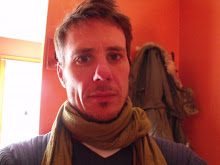
Amanda Mongeon Reads from Drive-by Saviours
Labels: 2010, Fiction, nova scotia, publishing, subway novel


Friday, August 13, 2010
Benjamin Talks Drive-by Saviours - Themes
Friday, July 30, 2010
Drive-by Saviours Trailer
Hi folks, here's a trailer I made for my novel with some help from my brother:
Labels: 2010, Fiction, Indonesia, subway novel, Toronto
Friday, June 25, 2010
Drive-by Saviours
I've been quite busy with the novel lately (it's coming out in September), first doing final edits then thinking marketing. To that effect, I've created a myspace page and put up a clip of me reading from the novel there, as well as some fusion-y music my brother created for a trailer we're working on. Click my face below to listen to those: I've also created a website for the book. Below is what the cover will look like. Click on that for the website (not a lot of content there yet but stay tuned for some video I'm working on regarding the book):

The publisher, Roseway (an imprint of Fernwood), also has a website for the book. Click the Fernwood logo to see that site. You can read a longer excerpt there:

I've also created a website for the book. Below is what the cover will look like. Click on that for the website (not a lot of content there yet but stay tuned for some video I'm working on regarding the book):The publisher, Roseway (an imprint of Fernwood), also has a website for the book. Click the Fernwood logo to see that site. You can read a longer excerpt there:
Labels: 2010, Fiction, publishing, subway novel
Monday, February 22, 2010
[opening excerpt of] Drafts 5 Through 8 in Chapter 6
Good social workers don’t share my fear of action and conflict. Some of them crave it. The best ones have a conflict switch that shuts down their own feelings so they can strategically dissect the heightened emotions of others. They have bagfuls of touchless tactics. They can throw bureaucracy at anger, they can speak in calm soothing tones that smother panicked screeching, and they can use just the right language to help a client accept the blame for his own problems.
It’s not that social workers don’t see the way society crushes people. But good ones know they can’t do shit about it, so they focus on the possible. With time, effort and smarts they can change how a client deals with the world.
I’m not a good social worker. I’ve been fleeing conflict since I was a child. I ran from family conflict to join my friends, and I ran even further away as soon as I got a student loan. I fled Nova Scotia, returned to the big city of my early childhood with saving-the-world dreams.
My sister flunked out of high school, remained at home and worked full time at the local paper mill. During my undergrad I studied a lot of Freud-babble about family and childhood, learned strategies, tactics and techniques for counselling people who had suffered family trauma, or were living in dysfunctional situations.
These theories fascinated me but I never related them to my own family. We students had been warned about our tendencies to self-diagnose, usually incorrectly, when learning about new disorders and behaviours. I hardly thought about my family at all. I put them out of my mind, barely kept in touch. And in the case of my sister, our adult relationship existed only through my mother’s updates. Michelle and my stepfather never bothered to talk after she moved to the US four years ago.
I thought about Michelle after the blackout, the next time I rode the TTC. I got on the bus and saw the usual waves of humanity.
I had promised myself I’d be more open to people when the power came back, but when I saw them all I was hit with agoraphobia. I sat down at the front, where you’re supposed to stand up for the elderly and disabled. I pulled out my sketchpad and sketched the lot of them, all hobbled together, like a comic book proof before the colour artist does his magic. For the thousandth time I wished for Michelle’s talent.
By the time I found Sarah snoring on the couch I had too many historical thoughts swirling in my head to bother with her. I went to bed and thought about Michelle some more. I thought about the girl she was, her genius of creation, with talents that far surpassed anything I could ever hope to achieve.
I’ve been drawing since I was a child. Once I entered the workforce I took classes every week. It kept my hands busy, scratched the itch that my computer keyboard gave me every day. I learned the techniques illustrators have used since the pencil was invented to create reasonably hand-drawn facsimiles of buildings and trees and faces. But I was more craftsman than artist.
Then there was Michelle. She could do what almost no one in human history could do. She could make something out of nothing. Those models she made as an early teen progressed from representations of places she’d seen in books to thin-air creations. She invented entire cities writ small. Tradition was just her starting point. It taught Michelle more about what was wrong with how we live than it did about rules and techniques for success. Michelle could revamp tradition and innovate on it, bring in new techniques from the atmosphere, spit on the gods and the ancestors and come away victorious. She was the greatest city planner and engineer in North America. At least on a model scale. Real life was a different story.
In real life Michelle taught English as a Second Language to immigrants in Portland. It was honourable work but it wasn’t exactly earth-moving, for a genius. I thought about it all night, until my stomach hurt. I called in sick in the morning.
It’s not that social workers don’t see the way society crushes people. But good ones know they can’t do shit about it, so they focus on the possible. With time, effort and smarts they can change how a client deals with the world.
I’m not a good social worker. I’ve been fleeing conflict since I was a child. I ran from family conflict to join my friends, and I ran even further away as soon as I got a student loan. I fled Nova Scotia, returned to the big city of my early childhood with saving-the-world dreams.
My sister flunked out of high school, remained at home and worked full time at the local paper mill. During my undergrad I studied a lot of Freud-babble about family and childhood, learned strategies, tactics and techniques for counselling people who had suffered family trauma, or were living in dysfunctional situations.
These theories fascinated me but I never related them to my own family. We students had been warned about our tendencies to self-diagnose, usually incorrectly, when learning about new disorders and behaviours. I hardly thought about my family at all. I put them out of my mind, barely kept in touch. And in the case of my sister, our adult relationship existed only through my mother’s updates. Michelle and my stepfather never bothered to talk after she moved to the US four years ago.
I thought about Michelle after the blackout, the next time I rode the TTC. I got on the bus and saw the usual waves of humanity.
I had promised myself I’d be more open to people when the power came back, but when I saw them all I was hit with agoraphobia. I sat down at the front, where you’re supposed to stand up for the elderly and disabled. I pulled out my sketchpad and sketched the lot of them, all hobbled together, like a comic book proof before the colour artist does his magic. For the thousandth time I wished for Michelle’s talent.
By the time I found Sarah snoring on the couch I had too many historical thoughts swirling in my head to bother with her. I went to bed and thought about Michelle some more. I thought about the girl she was, her genius of creation, with talents that far surpassed anything I could ever hope to achieve.
I’ve been drawing since I was a child. Once I entered the workforce I took classes every week. It kept my hands busy, scratched the itch that my computer keyboard gave me every day. I learned the techniques illustrators have used since the pencil was invented to create reasonably hand-drawn facsimiles of buildings and trees and faces. But I was more craftsman than artist.
Then there was Michelle. She could do what almost no one in human history could do. She could make something out of nothing. Those models she made as an early teen progressed from representations of places she’d seen in books to thin-air creations. She invented entire cities writ small. Tradition was just her starting point. It taught Michelle more about what was wrong with how we live than it did about rules and techniques for success. Michelle could revamp tradition and innovate on it, bring in new techniques from the atmosphere, spit on the gods and the ancestors and come away victorious. She was the greatest city planner and engineer in North America. At least on a model scale. Real life was a different story.
In real life Michelle taught English as a Second Language to immigrants in Portland. It was honourable work but it wasn’t exactly earth-moving, for a genius. I thought about it all night, until my stomach hurt. I called in sick in the morning.
Labels: 2003, Fiction, subway novel, Toronto
Thursday, October 02, 2008
best novel
The lighting and sound aren't the best, and I st-st-stumbled on a couple words, but here's a video of me receiving the Atlantic Writing Competition best novel prize from novelist Alf Silver. Below the video is the text of the reading in case you want to follow along.
The fantastic voyage began on a sandy blue paradise for fishermen and their children renting snorkelling equipment to drive-by tourists in 1973. This is where and when Bumi was born, his face all small and crinkly, brown and wide-eyed wonder at the implausibility of being plucked from his mother’s womb while she lay bleeding on a dirt floor silently and stubbornly refusing to cry out at the pain of birth. He was the Bugis boy with a Javanese name, chosen by his Javanese mother. She had, for the most part, let her own traditions slip away as the years and the island colluded to make her their own. Rilaka became her new motherland, its Buginese language her lingua franca. Her firstborn’s name was a tribute to that natal part of her, and because it meant ‘earth’ in her faraway mother-tongue, it honoured the place of his birth in a multicultural chorus.
From the beginning Bumi’s eyes pierced harder than any other, glowering while his father forced him to try football, glowing brightly at the chance to help the man count market money from mainland fish sales. By age three he’d humbled his father by becoming a faster and more accurate bookkeeper, who also spoke better Indonesian, a skill his father exploited for price negotiations with mainlanders. By age five he bored of accounting and took to engineering, devising a cheap and effective net floatation device out of two-litre pop bottles washed up along the shore.
Bumi’s father, a wiry man with surprising strength and audaciously self-granted authority, went looking for the boy late one evening after Bumi failed to come home for supper. On their tiny island of a hundred people, any lost child not found in five minutes was assumed drowned. Bumi’s father, Yusupu, was not worried. Bumi was no likely drowning victim, the first four-year-old potentially smarter than the sea.
Yusupu found Bumi on the far sloping side of the island where no one had ever bothered to build or settle. It was simply too far away from the others. In recent years it had become a place where the women gathered to make clothing when they wanted to get away from the tourists.
Bumi was there cursing a foul black streak the likes of which Yusupu hadn’t heard in all his years on boats, not from his father or grandfather, nor any other man he’d known.
“Bumi! What’s wrong?” he shouted, half in anger and half in concern, a magical mix of fatherly emotion that keeps us from being a threat to ourselves from a young age.
“I can’t get it tied!” Bumi retorted, pointing in frustration at a small tangle of netting he’d somehow dragged across the village, and 30 empty plastic pop bottles. “My fingers’re too small!”
“Why do you want to tie them?” Yusupu asked. The sharpness in his voice was all but gone.
“You tie them at one end to make it float, then you can leave it and go play,” Bumi explained. “Then you come back and you have fish. So then you have more time to play with me, Daddy.”
Yusupu was not an exceptionally hard-working man, but he did spend six hours a day at sea – six hours Bumi felt would be better spent playing with him. While floatation nets have existed in many other fishing cultures for centuries, Rilaka’s more labour intensive methods were ingenious for keeping the men out of the women’s hair for six hours a day, and vice versa, and for making physically strong, hardy men for an island left naked in the exposure of rain and merciless sun.
Most human beings survive on tradition their whole lives, and Yusupu had much in common with most human beings, especially the men of Rilaka. His son Bumi was among the rare few whose novel ideas change the way a species like ours lives, and indirectly change the way all life lives or dies.
Like most human innovations Bumi’s idea had unforeseen impacts. The lighter workload and greater cash flow that came their way (once Yusupu caught on and got to tying what Bumi’s little fingers couldn’t coordinate) resulted not in more play-time with his father, but less. And the time he did spend with the man became much less pleasant.
Yusupu and the other Rilakan fishers had never before felt any need for alcohol, which was technically forbidden. Not being pious men, finding themselves with unprecedented time on their hands, and not being in any particular hurry to return to their families, they decided to stop into a little bar with a live musician near the seaport. The toxins in the liquor put the inexperienced drinkers in a collectively ill mood, and most of them disliked the numbing effect of too many drinks. Only Yusupu’s stubbornness pushed him forward until he had drunk more than his fill several nights in a row. His cohorts would keep him company and switch to coffee after just one glass of strong rum. For Yusupu, the new practice became his habit after the others had tired of alcohol.
It was a week into the experiment that Bumi learned what betrayal really felt like. He had heard many stories of betrayal from his Uncle Karsi, the world's greatest storyteller, and in them the dastardly deeds were swiftly repaid, vigilante style. From Karsi's words Bumi imagined that betrayal was merely a seed of desire for revenge. The first time Yusupu hit him forever changed his understanding of pain. There was no desire in it at all, just deep disappointment.
He had stayed up late, determined to see his father before dream-time. He had refused to come home, afraid that sleep would take him if he got too comfortable. Instead he stayed by the shore playing long after the tourists had returned to the mainland and the other children had gone to sleep. He drew pictures in the sand with a stick to pass the hours long past sunset, and even past midnight, bleary-eyed and obsessed with the single thought of his father. When the boats finally returned Bumi ran to them and watched open-mouthed as the other men helped his father over the gunwale. Yusupu retched and spit into the sea he'd always told Bumi was sacred.
"Daddy!" Bumi cried, thinking Yusupu was hurt. He ran to him and pushed through the other men to offer a hand.
Yusupu looked down at Bumi and sneered. "What are you doing up?" he demanded.
Bumi swallowed and looked up at Yusupu, who pulled back at his matted salt-and-pepper hair. Even hunched over Yusupu towered over the boy like a giant sea creature lurching onto the land. "Waiting for you," Bumi said.
The men laughed and one tussled Bumi’s hair. "He misses you," one of them told Yusupu, who smiled a shy bemused smile, took the boy up into his arms, and carried him home.
Yusupu kept smiling until he had crouched in through the door of their little house. Then he put Bumi down and took him by the arm, looked the boy in the eyes, and said, "Don't you ever embarrass me like that again."
He gave a half smile and slapped Bumi across the face. Bumi's lips quivered and a tear came to his eye. "Are you going to cry now, Son?" he asked. "Are you going to embarrass me further?"
Bumi swallowed hard, sucking a head full of tension down his throat. His body was shaking, but he didn't cry. He shook his head solemnly 'no'. He would not embarrass his father any further.
"Good," Yusupu said. "Now get to sleep."
The fantastic voyage began on a sandy blue paradise for fishermen and their children renting snorkelling equipment to drive-by tourists in 1973. This is where and when Bumi was born, his face all small and crinkly, brown and wide-eyed wonder at the implausibility of being plucked from his mother’s womb while she lay bleeding on a dirt floor silently and stubbornly refusing to cry out at the pain of birth. He was the Bugis boy with a Javanese name, chosen by his Javanese mother. She had, for the most part, let her own traditions slip away as the years and the island colluded to make her their own. Rilaka became her new motherland, its Buginese language her lingua franca. Her firstborn’s name was a tribute to that natal part of her, and because it meant ‘earth’ in her faraway mother-tongue, it honoured the place of his birth in a multicultural chorus.
From the beginning Bumi’s eyes pierced harder than any other, glowering while his father forced him to try football, glowing brightly at the chance to help the man count market money from mainland fish sales. By age three he’d humbled his father by becoming a faster and more accurate bookkeeper, who also spoke better Indonesian, a skill his father exploited for price negotiations with mainlanders. By age five he bored of accounting and took to engineering, devising a cheap and effective net floatation device out of two-litre pop bottles washed up along the shore.
Bumi’s father, a wiry man with surprising strength and audaciously self-granted authority, went looking for the boy late one evening after Bumi failed to come home for supper. On their tiny island of a hundred people, any lost child not found in five minutes was assumed drowned. Bumi’s father, Yusupu, was not worried. Bumi was no likely drowning victim, the first four-year-old potentially smarter than the sea.
Yusupu found Bumi on the far sloping side of the island where no one had ever bothered to build or settle. It was simply too far away from the others. In recent years it had become a place where the women gathered to make clothing when they wanted to get away from the tourists.
Bumi was there cursing a foul black streak the likes of which Yusupu hadn’t heard in all his years on boats, not from his father or grandfather, nor any other man he’d known.
“Bumi! What’s wrong?” he shouted, half in anger and half in concern, a magical mix of fatherly emotion that keeps us from being a threat to ourselves from a young age.
“I can’t get it tied!” Bumi retorted, pointing in frustration at a small tangle of netting he’d somehow dragged across the village, and 30 empty plastic pop bottles. “My fingers’re too small!”
“Why do you want to tie them?” Yusupu asked. The sharpness in his voice was all but gone.
“You tie them at one end to make it float, then you can leave it and go play,” Bumi explained. “Then you come back and you have fish. So then you have more time to play with me, Daddy.”
Yusupu was not an exceptionally hard-working man, but he did spend six hours a day at sea – six hours Bumi felt would be better spent playing with him. While floatation nets have existed in many other fishing cultures for centuries, Rilaka’s more labour intensive methods were ingenious for keeping the men out of the women’s hair for six hours a day, and vice versa, and for making physically strong, hardy men for an island left naked in the exposure of rain and merciless sun.
Most human beings survive on tradition their whole lives, and Yusupu had much in common with most human beings, especially the men of Rilaka. His son Bumi was among the rare few whose novel ideas change the way a species like ours lives, and indirectly change the way all life lives or dies.
Like most human innovations Bumi’s idea had unforeseen impacts. The lighter workload and greater cash flow that came their way (once Yusupu caught on and got to tying what Bumi’s little fingers couldn’t coordinate) resulted not in more play-time with his father, but less. And the time he did spend with the man became much less pleasant.
Yusupu and the other Rilakan fishers had never before felt any need for alcohol, which was technically forbidden. Not being pious men, finding themselves with unprecedented time on their hands, and not being in any particular hurry to return to their families, they decided to stop into a little bar with a live musician near the seaport. The toxins in the liquor put the inexperienced drinkers in a collectively ill mood, and most of them disliked the numbing effect of too many drinks. Only Yusupu’s stubbornness pushed him forward until he had drunk more than his fill several nights in a row. His cohorts would keep him company and switch to coffee after just one glass of strong rum. For Yusupu, the new practice became his habit after the others had tired of alcohol.
It was a week into the experiment that Bumi learned what betrayal really felt like. He had heard many stories of betrayal from his Uncle Karsi, the world's greatest storyteller, and in them the dastardly deeds were swiftly repaid, vigilante style. From Karsi's words Bumi imagined that betrayal was merely a seed of desire for revenge. The first time Yusupu hit him forever changed his understanding of pain. There was no desire in it at all, just deep disappointment.
He had stayed up late, determined to see his father before dream-time. He had refused to come home, afraid that sleep would take him if he got too comfortable. Instead he stayed by the shore playing long after the tourists had returned to the mainland and the other children had gone to sleep. He drew pictures in the sand with a stick to pass the hours long past sunset, and even past midnight, bleary-eyed and obsessed with the single thought of his father. When the boats finally returned Bumi ran to them and watched open-mouthed as the other men helped his father over the gunwale. Yusupu retched and spit into the sea he'd always told Bumi was sacred.
"Daddy!" Bumi cried, thinking Yusupu was hurt. He ran to him and pushed through the other men to offer a hand.
Yusupu looked down at Bumi and sneered. "What are you doing up?" he demanded.
Bumi swallowed and looked up at Yusupu, who pulled back at his matted salt-and-pepper hair. Even hunched over Yusupu towered over the boy like a giant sea creature lurching onto the land. "Waiting for you," Bumi said.
The men laughed and one tussled Bumi’s hair. "He misses you," one of them told Yusupu, who smiled a shy bemused smile, took the boy up into his arms, and carried him home.
Yusupu kept smiling until he had crouched in through the door of their little house. Then he put Bumi down and took him by the arm, looked the boy in the eyes, and said, "Don't you ever embarrass me like that again."
He gave a half smile and slapped Bumi across the face. Bumi's lips quivered and a tear came to his eye. "Are you going to cry now, Son?" he asked. "Are you going to embarrass me further?"
Bumi swallowed hard, sucking a head full of tension down his throat. His body was shaking, but he didn't cry. He shook his head solemnly 'no'. He would not embarrass his father any further.
"Good," Yusupu said. "Now get to sleep."
Labels: 2008, Fiction, nova scotia, subway novel
Monday, August 25, 2008
Humungo News!
An exciting development for me: I won the H.R. (Bill) Percy Novel Prize for my novel (Living in the Dirt/Drive-by Saviours) in the Atlantic Writing Competition!
This is hopefully a big step toward finding a publisher.
Check out http://www.writers.ns.ca/pr25Aug08.html for details.
I will receive my prize and give a reading at a Gala Celebration of Writers and Writing next month.
This is hopefully a big step toward finding a publisher.
Check out http://www.writers.ns.ca/pr25Aug08.html for details.
I will receive my prize and give a reading at a Gala Celebration of Writers and Writing next month.
Labels: 2008, nova scotia, publishing, subway novel
Wednesday, May 14, 2008
Down to 3
Down to three potential titles for my novel. Please tell me your personal favourite:
Living in the Dirt
Child of Earth
Drive-by Saviours
-Bopper
Living in the Dirt
Child of Earth
Drive-by Saviours
-Bopper
Labels: publishing, subway novel
Tuesday, May 06, 2008
Reader Poll
Okay, I'm adding some more potential titles for my novel. Please help with your feedback. Which of these do you think will make a publisher furrow his or her brow and think, "hmm, that sounds like it's worth a look":
In the Dirt
Dirt Rich
Clean and Dirty
Bleeding on a Dirt Floor
Living in the Dirt
Burning Boats
Live Cargo
Control Freaks and Other Skeptics
God and Other Skeptics
Bumi
This Child of Earth
Child of Earth
Illegals and Drive-by Tourists
Drive-by Saviours
The Illegal
The Illegal Boy
The Fisher-Boy
The Storyteller
Thanks kindly for your feedback.
-Bopper
In the Dirt
Dirt Rich
Clean and Dirty
Bleeding on a Dirt Floor
Living in the Dirt
Burning Boats
Live Cargo
Control Freaks and Other Skeptics
God and Other Skeptics
Bumi
This Child of Earth
Child of Earth
Illegals and Drive-by Tourists
Drive-by Saviours
The Illegal
The Illegal Boy
The Fisher-Boy
The Storyteller
Thanks kindly for your feedback.
-Bopper
Labels: subway novel
Thursday, October 18, 2007
Come See Me Read From My Novel
Hi folks,
I'll be reading from the novel I've been working on at this years Canzine Festival, this Saturday (Oct 20) at 3:30 pm, in St. David's Church Hall on Brunswick St (adjacent to the library, across the road from Steve O' Reno's), in Halifax. If you can make it out I'd much appreciate the cheering section. For more info about canzine see http://halifaxpopexplosion.com/hpx07/?page_id=7.
Hope to see you there.
-BB
I'll be reading from the novel I've been working on at this years Canzine Festival, this Saturday (Oct 20) at 3:30 pm, in St. David's Church Hall on Brunswick St (adjacent to the library, across the road from Steve O' Reno's), in Halifax. If you can make it out I'd much appreciate the cheering section. For more info about canzine see http://halifaxpopexplosion.com/hpx07/?page_id=7.
Hope to see you there.
-BB
Labels: subway novel
Tuesday, August 21, 2007
Novel News
The newspaper I worked at in Ghana has published an excerpt from my 'subway novel' under the title 'Living in the Dirt.' See the excerpt here.
Hope all are well; seeya soon.
-Bopper
Hope all are well; seeya soon.
-Bopper
Labels: subway novel
Sunday, July 08, 2007
Audience Poll
Kind Readers,
I have five working titles for my novel [until now called only 'the subway novel' because that's where I wrote a good chunk of it], and I want to get your impressions of them. Knowing that few of you have read anything more than an occasional excerpt, I just want your impressions of the titles on their own, as if you had never heard of me or the novel and were browsing your local bookstore for something new.
Would any of these arouse your curiosity? Make you want to pick up the book and read the back flap? Which of the five is most likely/least likely to do so? What would you think the story was about based on the title? What do they bring to your mind? Do they all suck? Should I scrap them all and start fresh in the morning?
Any comments would be appreciated.
Here are the titles:
Thanks for your help.
-Bopper
I have five working titles for my novel [until now called only 'the subway novel' because that's where I wrote a good chunk of it], and I want to get your impressions of them. Knowing that few of you have read anything more than an occasional excerpt, I just want your impressions of the titles on their own, as if you had never heard of me or the novel and were browsing your local bookstore for something new.
Would any of these arouse your curiosity? Make you want to pick up the book and read the back flap? Which of the five is most likely/least likely to do so? What would you think the story was about based on the title? What do they bring to your mind? Do they all suck? Should I scrap them all and start fresh in the morning?
Any comments would be appreciated.
Here are the titles:
- Control Freaks and Skeptics
- The Underestimated
- Living in the Dirt
- Broken Social Contract
- The Skeptical Nomads
Thanks for your help.
-Bopper
Labels: Fiction, subway novel
Friday, June 22, 2007
1,089 Hours and 7,000 kilometres
Sing 'hallelujah!' Throw up your hands, the first draft of the novel is complete. Four years later. Tis a glorious day, and will allow for a nice weekend before the editing process begins. To celebrate, here is an excerpt from Chapter 11:
1,089 Hours and 7,000 Kilometres in Chapter 11
According to Robadise the case of the four child deaths and the Pulau man who killed them (some claimed that his weapon was black magic) had become a national issue thanks to the state supported media’s love of rogue violence and swift vengeful justice. Therefore, nowhere in Indonesia was safe for Bumi, the new prime public enemy. Robadise’s plan was to smuggle Bumi somewhere the Indonesian government couldn’t reach him. He provided few details, saying only that the less Bumi knew about it the better.
“Here’s the deal,” he told Bumi. “If you stay here you will die. I have friends who can save you from that, and save Ada, Bunga, and Baharuddin the pain of losing you. If it works, you can one day send for them. To be frank, it’s a long shot. But staying here is certain death, and that would in turn kill my sister and my niece and my nephew. At least this way they have some hope to hold on to.”
Robadise explained that his friend in the navy was well connected with the Chinese human smuggling industry. Bumi’s special circumstances complicated things, but for a high price he could be sent somewhere he could be a free man. “Think Bumi, no more hiding your books. No more living a lie, you can be yourself again.”
Bumi informed his brother-in-law that without Ada, he could not be himself.
“This is your only hope, Bumi. Maybe you would rather die than leave your family, but think of their needs. This way they have hope, and maybe one day you can be reunited in a place that is free, where you can pursue your ideas, where your intelligence can be put to good use. Maybe you will become rich.”
This beast my brother-in-law, thought Bumi, is a clever one. And again, questions. Why does he want to be rid of me? Is he working for Suharto? Perhaps he thinks I’m an inadequate husband for his wife? Bumi’s obsession with having committed child murder had been replaced with a deeply planted fear of the only man who seemed to be his friend. Yet another obsession he could not put to rest, an idea he could not disprove. “And Ada, you’ve discussed this with her?” he asked.
“Yes, Bumi.”
“And?”
“She reluctantly agreed.” Aha! Reluctantly. And her absence was an indicator; why was she sent away like a common servant after bringing their untouched tea during the most important conversation of Bumi’s life? As if reading between the lines on Bumi’s face Robadise elaborated. “Of course she doesn’t want to lose you, Bumi. But it is obvious to everyone, expect maybe yourself, that we will lose you one way or another. We either lose you to God, or we lose you to Canada.”
“Canada?!” Bumi felt drunk as his mind clouded. Canada? The plan was insane. And Canada, of all the destinations.
“I shouldn’t have told you that,” said Robadise. “You weren’t supposed to know that much.”
“You couldn’t send me far enough, could you brother?” Bumi answered through pursed lips. He squeezed his eyes shut hard, straining his face until it was crinkled like his birth-face and tears were forced from his eyes. His chest heaved as he felt everything slip away, again. And now, 15 years later, he remained utterly feeble and small in the face of the powers acting to move him. He laid his head down on the floor and closed his eyes all the way, ready to submit to his fate and accept it as punishment for all his imagined deeds, and the evil he may have done, the things he had thought about that should never have crossed his mind.
“Canada is a good place for you to go, Bumi. Lots of coast, multicultural, easy refugee laws. Australia is almost impossible. And they treat refugees like criminals. Worse actually - they put them in internment camps worse than prisons, you don’t even get a lawyer and most people there just want to die.” Bumi knew exactly how they felt. “I even hear that Suharto has spies in those intern camps. They report back to him about who is trying to get out of Indonesia and into Australia. So if Australia sends you home he knows it, and you die.
"Anyway, most likely you’d never get past their navy – they patrol the shoreline for illegals. Most likely you’d starve to death at sea or get sent back. You don’t want that. The USA is difficult too. Everyone tries to go there and few succeed. Canada has very good odds, and it’s too far for them to get to you.
"Besides, your politics fit better in Canada.”
1,089 Hours and 7,000 Kilometres in Chapter 11
According to Robadise the case of the four child deaths and the Pulau man who killed them (some claimed that his weapon was black magic) had become a national issue thanks to the state supported media’s love of rogue violence and swift vengeful justice. Therefore, nowhere in Indonesia was safe for Bumi, the new prime public enemy. Robadise’s plan was to smuggle Bumi somewhere the Indonesian government couldn’t reach him. He provided few details, saying only that the less Bumi knew about it the better.
“Here’s the deal,” he told Bumi. “If you stay here you will die. I have friends who can save you from that, and save Ada, Bunga, and Baharuddin the pain of losing you. If it works, you can one day send for them. To be frank, it’s a long shot. But staying here is certain death, and that would in turn kill my sister and my niece and my nephew. At least this way they have some hope to hold on to.”
Robadise explained that his friend in the navy was well connected with the Chinese human smuggling industry. Bumi’s special circumstances complicated things, but for a high price he could be sent somewhere he could be a free man. “Think Bumi, no more hiding your books. No more living a lie, you can be yourself again.”
Bumi informed his brother-in-law that without Ada, he could not be himself.
“This is your only hope, Bumi. Maybe you would rather die than leave your family, but think of their needs. This way they have hope, and maybe one day you can be reunited in a place that is free, where you can pursue your ideas, where your intelligence can be put to good use. Maybe you will become rich.”
This beast my brother-in-law, thought Bumi, is a clever one. And again, questions. Why does he want to be rid of me? Is he working for Suharto? Perhaps he thinks I’m an inadequate husband for his wife? Bumi’s obsession with having committed child murder had been replaced with a deeply planted fear of the only man who seemed to be his friend. Yet another obsession he could not put to rest, an idea he could not disprove. “And Ada, you’ve discussed this with her?” he asked.
“Yes, Bumi.”
“And?”
“She reluctantly agreed.” Aha! Reluctantly. And her absence was an indicator; why was she sent away like a common servant after bringing their untouched tea during the most important conversation of Bumi’s life? As if reading between the lines on Bumi’s face Robadise elaborated. “Of course she doesn’t want to lose you, Bumi. But it is obvious to everyone, expect maybe yourself, that we will lose you one way or another. We either lose you to God, or we lose you to Canada.”
“Canada?!” Bumi felt drunk as his mind clouded. Canada? The plan was insane. And Canada, of all the destinations.
“I shouldn’t have told you that,” said Robadise. “You weren’t supposed to know that much.”
“You couldn’t send me far enough, could you brother?” Bumi answered through pursed lips. He squeezed his eyes shut hard, straining his face until it was crinkled like his birth-face and tears were forced from his eyes. His chest heaved as he felt everything slip away, again. And now, 15 years later, he remained utterly feeble and small in the face of the powers acting to move him. He laid his head down on the floor and closed his eyes all the way, ready to submit to his fate and accept it as punishment for all his imagined deeds, and the evil he may have done, the things he had thought about that should never have crossed his mind.
“Canada is a good place for you to go, Bumi. Lots of coast, multicultural, easy refugee laws. Australia is almost impossible. And they treat refugees like criminals. Worse actually - they put them in internment camps worse than prisons, you don’t even get a lawyer and most people there just want to die.” Bumi knew exactly how they felt. “I even hear that Suharto has spies in those intern camps. They report back to him about who is trying to get out of Indonesia and into Australia. So if Australia sends you home he knows it, and you die.
"Anyway, most likely you’d never get past their navy – they patrol the shoreline for illegals. Most likely you’d starve to death at sea or get sent back. You don’t want that. The USA is difficult too. Everyone tries to go there and few succeed. Canada has very good odds, and it’s too far for them to get to you.
"Besides, your politics fit better in Canada.”
Labels: 2006, Fiction, subway novel, Toronto
Tuesday, March 28, 2006
0 to 60 in Chapter 9, an Excerpt
I spent three weeks of my 19th summer loading shingles into a machine that applied a layer of grey paint to its contents (the shingles). At the end of my three week temp job I was offered, and I declined, a full-summer placement. The factory lunatics had given me a glimpse into what I would become after a full summer of such boredom. So it is difficult for me to imagine how Bumi, who has twice my intellectual capacity and was crazy before he began factory work, survived six years of it.
I do know that during those years he became an almost complete insomniac, consumed hundreds of books a year, lost complete touch with his coffee shop friends, and was in constant conflict with Ada’s family. It was only his devotion to Ada and his children that kept him living.
Baharuddin was born under the usual sheen of slick placental fluids and Bumi was surprised to find himself as amazed by his second child as he was by the first. Bumi’s dazed amazement inspired Ada to choose the boy’s name, a description of newness. Newness never fails to astound.
A week after Baharuddin’s birth, taking inspiration from ‘Roots’, which he finished reading while Ada was in labour, Bumi took his 7-pound newborn outside the hospital walls and cradled his whole backside in his left hand and lifted him to see the stars and the black heavens. He said, “Look my son.” Baharuddin cried as his white cotton blankets unfurled and fell around Bumi’s hand.
“Look son,” repeated Bumi in a loud deep voice. “I want to tell you something very important. You are immensely special and important. Never let anyone tell you otherwise. In this world you will be expected to conform and you will receive nothing if not pressure to be numb, to obey, to feed the collective ambiguity. Don’t let them do that to you. You are the most important thing, other than what you see high above and around you. Always remember that.”
Bumi gathered the crying infant back into his arms, covered him again and whispered gently in his ear, “You are more important than anything except the universe itself. God will never help you through this life and I am not a strong man. I will always give you my love and let you be what you want to be. The rest is up to you.”
I do know that during those years he became an almost complete insomniac, consumed hundreds of books a year, lost complete touch with his coffee shop friends, and was in constant conflict with Ada’s family. It was only his devotion to Ada and his children that kept him living.
Baharuddin was born under the usual sheen of slick placental fluids and Bumi was surprised to find himself as amazed by his second child as he was by the first. Bumi’s dazed amazement inspired Ada to choose the boy’s name, a description of newness. Newness never fails to astound.
A week after Baharuddin’s birth, taking inspiration from ‘Roots’, which he finished reading while Ada was in labour, Bumi took his 7-pound newborn outside the hospital walls and cradled his whole backside in his left hand and lifted him to see the stars and the black heavens. He said, “Look my son.” Baharuddin cried as his white cotton blankets unfurled and fell around Bumi’s hand.
“Look son,” repeated Bumi in a loud deep voice. “I want to tell you something very important. You are immensely special and important. Never let anyone tell you otherwise. In this world you will be expected to conform and you will receive nothing if not pressure to be numb, to obey, to feed the collective ambiguity. Don’t let them do that to you. You are the most important thing, other than what you see high above and around you. Always remember that.”
Bumi gathered the crying infant back into his arms, covered him again and whispered gently in his ear, “You are more important than anything except the universe itself. God will never help you through this life and I am not a strong man. I will always give you my love and let you be what you want to be. The rest is up to you.”
Labels: 2005, Fiction, subway novel, Toronto