Monday, January 18, 2010
Nova Scotian wisdom
"Bhutan's sacramental attitude towards the natural world - that the world is literally alive and sentient - is the normal human view. It's shared by my Celtic ancestors, by virtually all ancient civilizations, by aboriginal peoples worldwide." -Silver Donald Cameron
Labels: quotations


Friday, November 13, 2009
Poverty
"The poor are not those who have been 'left behind'; they are the ones who have been robbed." -Vandana Shiva
"Before we can make poverty history, we need to get the history of poverty right. It’s not about how much wealthy nations can give, so much as how much less they can take." -Vandana Shiva
"Before we can make poverty history, we need to get the history of poverty right. It’s not about how much wealthy nations can give, so much as how much less they can take." -Vandana Shiva
Labels: quotations
Thursday, November 12, 2009
Stuff You Wouldn't Think He'd Have Said
"Every gain that is made, every warship launched, every rocket fired signifies, in the final sense, a theft from those who hunger and are not fed, those who are cold and not clothed."--Eisenhower
Labels: quotations
Thursday, August 06, 2009
Questions
"How could it be...that Mali was producing more than 60 tonnes of gold a year (and more cotton than any other country in sub-Sahara Africa) and still be coming out at the bottom of the United Nations' HUman Development Index, usually ranking among the five least developed countries on earth?
"And how could it be that Nigeria, Angola, Cameroon, Gabon and the Republic of Congo (capital Brazzaville) and more recently Mauritania, and Equatorial Guinea could be such important oil producers and still suffer such crushing monetary poverty and dismal statistics on access to basic education and health care, life expectancy and other key indicators on human development?"
--Joan Baxter
Labels: quotations
Wednesday, August 05, 2009
cheap calories
"We all subsidize the cheap calories with our tax dollars, the strategists make fortunes, and the overwight consumers get blamed for the violation. The perfect crime." --Barbara Kingsolver
Labels: quotations
Saturday, August 01, 2009
television eyes
"You might see things better on television, but you'll never know if you were alive or dead while you watched."--Barbara Kingsolver
Labels: quotations
Wednesday, July 22, 2009
The Difference
"We need to theorize race and gender not as meaningless but as meaningful---as sites of difference, filled with constructed meanings that are in need of constant decoding and interrogation. Such analysis may not finally free us of the ubiquitous body-biology bind or release us from the quagmire of racism and sexism, but it may be at once the most and the least we can do to reclaim difference from the molds of mass production and the casts of the dominant culture."
--Ann duCille
--Ann duCille
Labels: quotations
Sunday, June 28, 2009
Atwood on Poetry
"[Poetry] lets the shadowy forms of thought and feeling out into the light, where we can take a good look at them and perhaps come to a better understanding of who we are and what we want, and what the limits to those wants may be." --Margaret Atwood
Labels: quotations
Sunday, June 21, 2009
Economic Migration
"Africans returning from the wealthy world often perpetuate these myths that life there is easy and money very easy to come by. They may not wish to divulge that they earned their salaries by cleaning bathrooms, suffered humiliating insults, and that they did not live like kings while abroad. Few in Africa have any idea of just what squats and slums and hardship really await the unskilled or the sans papiers (illegal) immigrants in Europe or North America. Some are shocked when they learn that in major European and North American cities there are homeless people living on the streets. Few people seeking visas seemed to want to listen to me list the constraints they would have to adapt to in the wealthy world, where competition is extreme, taxes must be paid and where time is money and thus king, ruling every minute of the day. From their perspective, these issues were all irrelevant. The important thing was a steady income that would provide funds to help support the family back home and could be saved towards a more secure future. A minimum wage job in Europe or North America could bring in more than a teacher or even a doctor earns in much of Africa."
--Joan Baxter
--Joan Baxter
Labels: quotations
Saturday, June 13, 2009
the universe
The universe is composed of subjects to be communed with, not objects to be exploited. Everything has its own voice. Thunder and lightning and stars and planets, flowers, birds, animals, trees--all these have voices, and they constitute a community of existence that is profoundly related. --Thomas Berry
Labels: quotations
Tuesday, May 05, 2009
A Sentence I Loved
"It is this enforced brevity that discourages obfuscating digressions and promotes precision."
--Lia Gainger, This Magazine, May 2009
--Lia Gainger, This Magazine, May 2009
Labels: quotations
Monday, November 12, 2007
Good Quotations
Lately I've been reading and listening to music with pen in hand and writing down good quotations for future use. I occasionally use one of these at the top of my blog. Fearing these go largely unnoticed, and not wanting to waste these pearls, I offer you some sage wisdom via fine writers in my living room:
“We could go back knowing better the things that one fought against, knowing better the kind of thing that one must build.”
--Alan Paton in ‘Cry, the Beloved Country’ written in 1948
"But they go and abolish the external form of slavery and arrange so that one can no longer buy and sell slaves, and they imagine and assure themselves that slavery no longer exists, and do not see or wish to see that it does, because people still want and consider it good and right to exploit the labour of others."
--Leo Tolstoy in The Kreutzer Sonata, 1889
“Just consider…what a life-long framework for, let’s say, a spiritually rich, holistic education might look like: it might start with soil structure and why the biochemistry of organic farming sustains biodiversity, and go on to look at how biodiversity equates with an optimal balance of arable crops and animal stock, and that with animal welfare and human health; with awareness of energy alternatives that would mitigate dangers of global warming and keep the old and poor from being cold; with ecological restoration including computer modelling of new techniques and evolutionary processes; with maximizing economic linkages and multipliers at bioregional, national and global levels; with business structures that harmonise enterprise with accountability and cooperation; with an economics of ‘Fair Trade’; with ecological architecture and clean, efficient public transport systems with the spiritual ability to see anew why all life is providential; with healing skills based on advanced scientific and spiritual principles, with knowing the roots of artistic creativity and inspiration; with poetics and story, and learning how to listen to one another; with a participatory politics of empowerment; with awareness of the psychology of prejudice and the resolution of conflict; with a non-violent civic-defence strategy and taking away the causes that give rise to war; with cherishing human life from cradle to grave; with extending the erotic into all of life, including sexual love; with the kids having fun and playing in treehouses; with the discovery of beauty as the touchstone of what is good; in short, with the building of community as right relationship between soil, soul and society, powered up by the passion of the heart, steered by the reason of the head, and then applied by the skilled technique of the hand.”
--Alistair McIntosh, Soil & Soul, 2001
“The first man who, having enclosed a piece of ground, bethought himself of saying ‘This is mine’, and found people simple enough to believe him, was the real founder of civil society. For how many crimes, wars, and murders, from how many horrors and misfortunes might not any one have saved mankind, by pulling up the stakes, or filling up the ditch, and crying to his fellows: ‘Beware of listening to this impostor; you are undone if you once forget that the fruits of the Earth belong to us all, and the Earth itself to nobody.’”
–Jean-Jacques Rousseau, Discourse on the Origin of Inequality, 1754
“With poetry you can, perhaps, get by with eating less.” –Alistair McIntosh, Soil & Soul, 2001
“they’re in the business of panic and control
we’re in the business of the heart and of the soul”
-Ron Sexsmith
“Over a hundred years ago [Nova Scotia] joined the other provinces of British North America to form a nation with great hopes for the future. That future never arrived and much of its industrial wealth was sucked into the conglomerate machinery of Ontario. Later tariff walls, raised by the Canadian heartland, put an end to world traffic and forced trade to the west and not the natural north-southflow of goods.”
–R. Allen Benjamin, The Benjamins in America: A Yankee Planter in Nova Scotia
“The only thing worse than growing up, is never quite learning how.” –Joel Plaskett
“The gods you do not pay are the ones that can curse you best.” –Nelson in Barbara Kingsolver’s ‘The Poisonwood Bible’
“I don’t see why people buy assault weapons and nuclear arms for fun, a family could have a domestic incident that could get out of hand and they may use those weapons.” –Jean Chretien
“Common sense…is the witness of society’s existence.” –John Ralston Saul
“Dogs chase cars, and men chase dreams. The dog is the more practical it seems.” –Steve Forbert
“I think one of the major shortcomings of the mainstream psychological establishment is the way that they determine whether a mental issue becomes a problem on the basis of whether it interferes with your day to day functioning. This is pretty bang on, but the problem comes in when they confuse how you want to be functioning with how your society or friend or family or boss want you to function. Maybe the reason that you can’t seem to bring yourself to get up in the morning has to do with the fact that you don’t want to spend another day in your cubicle, rather than the fact that you’re clinically depressed. You may not need Zoloft but rather a drastic change of lifestyle.” –Maryse
“If I can’t dance, it’s not my revolution.” -Emma Goldman
“I should believe only in a god who knows how to dance…now I am nimble, now I can fly, now I see myself under myself, now a god dances within me.” –Nietszshe
“I am overwhelmed now by the awfulness of oversimplification. For I realize that not only have I been guilty of it through this long and burning day but also through most of my yet-young life and it is only now that I am doubly its victim that I begin vaguely to understand. For I had somehow thought that “going away” was but a physical thing. And that it had only to do with movement and with labels like the silly “Vancouver” that I had glibly rolled off my tongue; or with the crossing of bodies of water or with the boundaries of borders. And because my father had told me I was “free” I had foolishly felt that it was really so. Just like that. And I realize now that the older people of my past are more complicated than perhaps I had ever thought…For the man in whose glassed-in car I now sit sees only similarity. For him the people of this multi-scarred little town are reduced to but a few phrases and the act of sexual intercourse. They are only so many identical goldfish leading identical, incomprehensible lives within the glass prison of their bowl. And the people on the street view me behind my own glass in much the same way, and it is the way that I have looked at others in their “Foreign licence” cars, and it is the kind of judgement that I myself have made. And yet it seems that neither these people nor this man are in any way unkind and not to understand does not necessarily mean that one is cruel. But one should at least be honest.”
–Alistair MacLeod in ‘The Vastness of the Dark, 1971
“Ninety-five hundred years after humanity supposedly abandoned the hunting-gathering life, about three-quarters of the earth’s landmass was still occupied by hunter-gatherers who had never heard of or participated in the Agricultural Revolution.” – Daniel Quinn
“To accord [our hunter-gatherer ancestors] humanity is to deny that we – and we alone – are humanity, which is an important element of our cultural mythology.” –Daniel Quinn
“While the Agricultural Revolution began ten thousand years ago, it didn’t end then. It’s still being carried forward today as we continue to clear land for crops to grow food for ourselves.” –Daniel Quinn
“Famines occur among settled, agricultural peoples. They’re stuck in their own stricken area and can’t forage for food in their neighbours’ territories, because the food there is definitely not free for the taking.” –Daniel Quinn
“It’s the voiced belief of our culture that the world is a human possession, that it was our divinely appointed destiny to conquer and rule it, that ours is the one right way for humans to live, and that we must cling to this way of life even if it kills us. And it is the unvoiced assumption…that God is incompetent.” –Daniel Quinn
“The people of the world simply must confront the fact that the period of mass extinctions that will end with our own has already begun, and that this isn’t something we can just go on ignoring.” --Daniel Quinn
“[Hebrews] knew that God didn’t create the world for palm trees or jellyfish, he created it for humans. He doesn’t concern himself with the doings of lizards or beetles. He concerns himself with the doings of humans. He didn’t promise the dinosaurs a Messiah…And he didn’t send his only-begotten son to save the wildlife and the rain forests.” –Daniel Quinn
“In its fundamental vision, the environmentalist movement reinforces the idea that there is an “us” and an “it” – two separate things – when in fact what we have here is a single community.” –Daniel Quinn
“In terms of importance to the community as a whole, I would without hesitation rank earthworms above humans.” –Daniel Quinn
“Gorbachev didn’t create changed minds; changed minds created Gorbachev.” –Daniel Quinn
“As the Semites saw it (and it is of course their version of [Genesis] that we have) the tiller of the soil Cain was watering his fields with the blood of Able the herder. Cain the tiller of the soil has carried his knife with him to every corner of the world, watering his fields with the blood of tribal peoples wherever he found them. He arrived here in 1492 and over the next three centuries watered his fields with the blood of millions of Native Americans. Today he’s down there in Brazil, knife poised over the few remaining aboriginals in the heart of that country.”
--Daniel Quinn
“As we go about our business of running the world, we have no doubt that we’re doing as good a job as God, if not better. Obviously God put a lot of creatures in the world that are quite superfluous and even pernicious, and we’re quite at liberty to get rid of them. We know where the rivers should run, where the swamps should be drained, where the forests should be razed, where the mounts should be levelled, where the plains should be scoured, where the rain should fall. To us, it’s perfectly obvious that we have this knowledge.” –Daniel Quinn
“This is precisely how the agriculturalist operates, saying ‘If I scour this plain to plant food for myself, then this will be evil for all the creatures that inhabit the plain, but it’ll be good for me. If I raze this forest to plaint food for myself, then this will be evil for all the creatures that inhabit the forest, but it’ll be good for me.’” –Daniel Quinn
“Prohibition is the essence of our law, but the essence of tribal law is remedy. Misbehaviour isn’t outlawed in any tribe. Rather, tribal law prescribes what must happen in order to minimize the effect of misbehaviour and to produce a situation in which everyone feels that they’ve been made as whole again as it’s possible to be…One of the virtues of tribal law is that it presupposes that people are just the way we know they are: generally wise, kind, generous, and well intentioned but perfectly capable of being foolish, unruly, moody, cantankerous, selfish, greedy, violent, stupid, bad tempered, sneaky, lustful, treacherous, careless, vindictive, neglectful, petty, and all sorts of other unpleasant things. Tribal law doesn’t punish people for their shortcomings, as our law does. Rather, it makes the management of their shortcomings an easy and ordinary part of life.” –Daniel Quinn
“When the Israelites escaped from Egypt in the thirteenth century BC, they were literally a lawless horde, because they’d left the Egyptian list of prohibitions behind. They needed their own list of prohibitions, which God provided – the infamous ten. But of course ten didn’t do it. Hundreds more followed, but they didn’t do it either. No number has ever done it for us. Not a thousand, ten thousand, a hundred thousand. Even millions don’t do it, and so every single year we pay our legislators to come up with more. But no matter how many prohibitions we come up with, they never do the trick, because no prohibited behaviour has ever been eliminated by passing a law against it. Every time someone is sent to prison or executed, this is said to be “Sending a message” to miscreants, but for some strange reason the message never arrives, year after year, generation after generation, century after century. Naturally, we consider this to be a very advanced system.” --Daniel Quinn
Labels: quotations
Tuesday, December 27, 2005
Martin Luther King on Oppression

"We know through painful experience that freedom is never voluntarily given by the oppressor; it must be demanded by the oppressed."
--Martin Luther King in his Letter from Birmingham Jail, 1963
Labels: quotations
Tuesday, December 20, 2005
Barbara Kingsolver on Civilization's Illusions

"Illusions mistaken for truth are the pavement under our feet. They are what we call civilization."
--Barbara Kingsolver, in 'The Poisonwood Bible', 1999
Labels: quotations
Tuesday, December 06, 2005
Linda Tuhiwai Smith on Researchers
"Why do they always think by looking at us they will find the answers to our problems, why don't they look at themselves?"
--
Linda Tuhiwai Smith, in 'Decolonizing Methodologies', 1999

--
Linda Tuhiwai Smith, in 'Decolonizing Methodologies', 1999

Labels: quotations
Saturday, December 03, 2005
Susan Eckstein on community giving and personal prejudice
"So committed were many Colombans to the spirit of giving that they sometimes volunteered for group-sponsored causes that were at odds with their private views. The Italian American men who helped repair the Jewish temple, for example, could be heard among themselves mouthing anti-Semitic slurs. Giving to the community had a life of its own and Colombans were not to let their personal prejudices get in the way."
--Susan Eckstein, in 'Community as Gift-Giving: Collectivistic Roots of Volunteerism', 2001

--Susan Eckstein, in 'Community as Gift-Giving: Collectivistic Roots of Volunteerism', 2001

Labels: quotations
Friday, December 02, 2005
Billy Bragg on love & football
"I feel like I've won the cup
every time that we make love
Forty-five minutes each way
at halftime I hear a brass band play"
--Billy Bragg, from 'The Boy Done Good', 1997

every time that we make love
Forty-five minutes each way
at halftime I hear a brass band play"
--Billy Bragg, from 'The Boy Done Good', 1997

Labels: quotations
Wednesday, November 23, 2005
Arundhati Roy on family:
"This was the trouble with families. Like invidious doctors, they knew just where it hurt."
--Arundhati Roy, from 'The God of Small Things', 1997

--Arundhati Roy, from 'The God of Small Things', 1997

Labels: quotations
Sunday, November 20, 2005
Anita Rau Badami on Television:
"She had seen a nature program about Africa on television last week. Killer bees were dangerous. They could kill with a single sting and travel long distances without getting tired. Nandana wasn't sure where Africa was in relation to Vancouver, but on the world map in her room it didn't look far at all. She and Molly McNaughton had discussed it and agreed that it was ab-SO-lute-ly possible for those bees to fly to Canada."
--Anita Rau Badami, in 'The Hero's Walk', 2000

--Anita Rau Badami, in 'The Hero's Walk', 2000

Labels: quotations
Thursday, November 17, 2005
Joann McCaig on Oppression
"Melissa began grad school with great promise. But by the end of fall term, she looked unhinged, skeletal, pale with shame. At first, she'd slink into Diana's office, haunted, saying 'I just don't understand...' By winter term, Melissa avoided Diana, looked right through her at readings and lectures. At the annual grad-student conference in March, Melissa stood up to give a paper in which she cried and apologized publicly for being white, middle-class, and racist."
--Joann McCaig, from 'The Textbook of the Rose', 2000
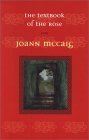
--Joann McCaig, from 'The Textbook of the Rose', 2000

Labels: quotations